
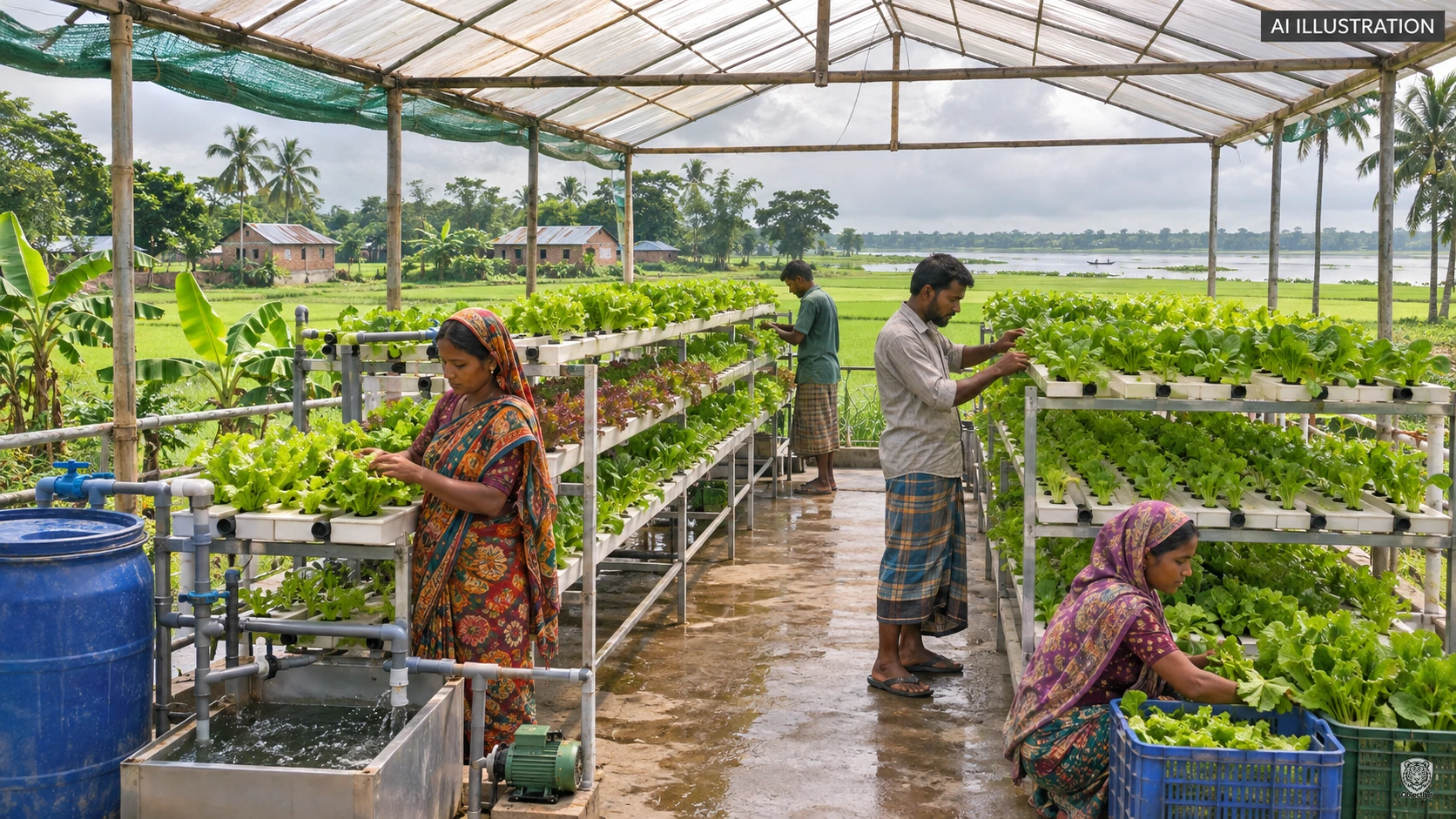
ওপরের দিকে কয়েক স্তরে চাষ বাংলাদেশের শহরগুলোর কাছে তাজা সবজি সরবরাহে সাহায্য করতে পারে। আসল পরীক্ষা হলো উপযোগী ফসল বাছাই এবং তাপ, পানি, বিদ্যুৎ, স্বাস্থ্যবিধি ও খরচ সামলানো।
A farm does not always need a wide field. Vegetables can also grow on shelves, with roots supplied by water and dissolved nutrients. For Bangladesh, that picture raises a useful question: could growing upward help produce fresh food near crowded cities? The answer depends on the crop, the climate, and the cost of keeping plants healthy. More shelves alone do not make a good farm. What vertical farming means Vertical farming uses several growing levels within the same floor area. Hydroponics describes something different: growing plants without soil, using a nutrient solution. A hydroponic farm can have just one level. The two methods can work together, but they do not mean the same thing. The US Department of Agriculture explains these different growing systems. Plants still need light, water, nutrients, and oxygen around their roots. Some systems support roots with materials such as coconut coir. Others use channels or tanks. These choices affect how water moves and how much gear is needed, as Oklahoma State University describes. A greenhouse may use sunlight, while an enclosed room depends on lamps. Stacking plants also creates a challenge: each level must receive enough light. Bangladesh has a research base This is not a wholly new field for local researchers.
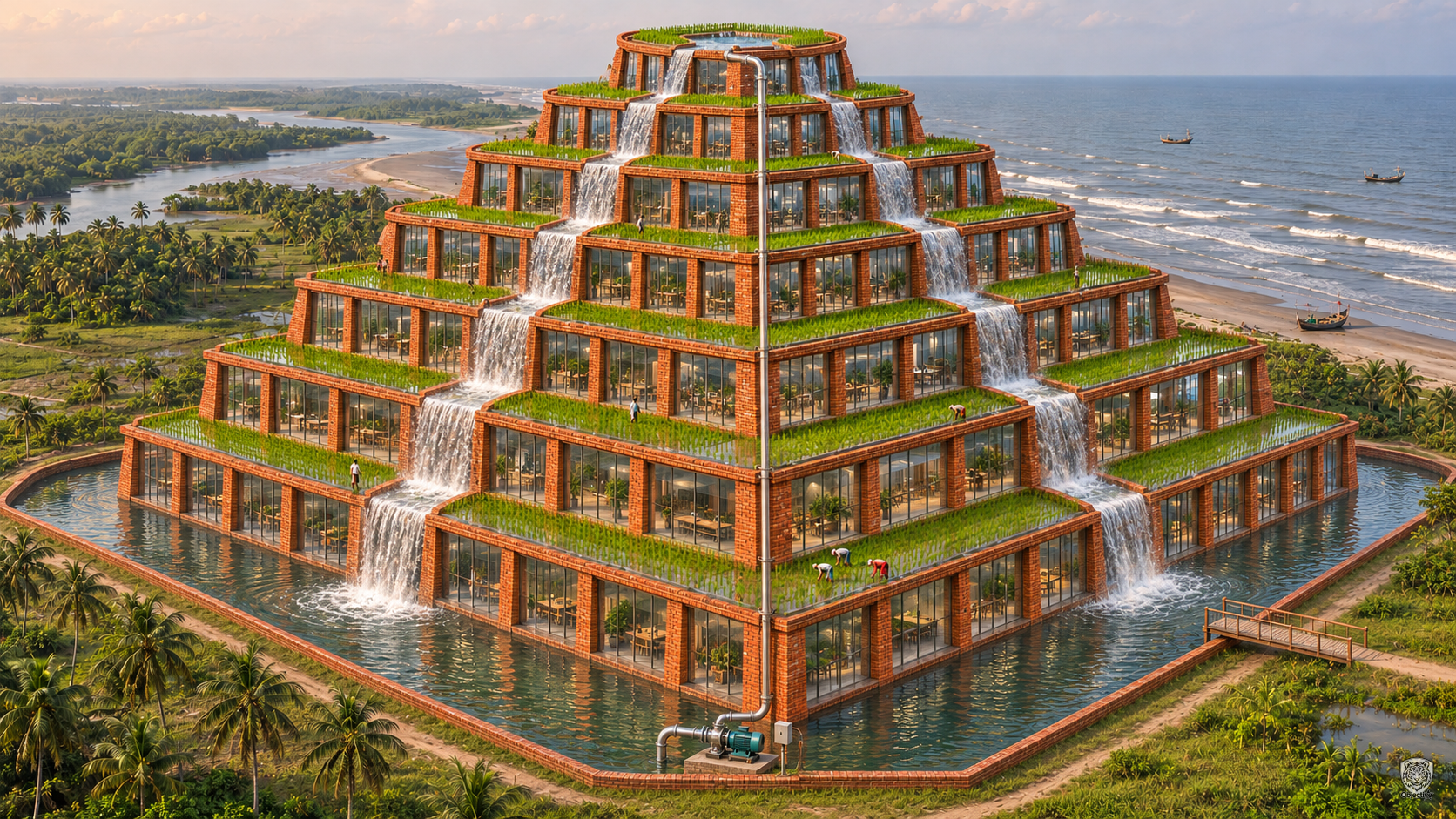
The Bangladesh Agricultural Research Institute has developed hydroponic methods for crops including lettuce, tomatoes, cucumbers, and capsicum. A Krishi Gobeshona Foundation project is testing simpler systems and nutrient mixes made with materials available in Bangladesh. It also reports training and trials in several locations. These are useful foundations, but they do not establish that large indoor farms are widely profitable.
Land pressure gives the idea a clear purpose. A 2023 study commissioned by the Netherlands Enterprise Agency describes scarce land and growing urban areas. It found that protected vegetable farming mainly served a premium market, including hotels, restaurants, and selected shops. That finding suggests a starting point for testing demand, rather than proof that every urban neighborhood can support a vertical farm.
Choose crops that fit the system
Leafy vegetables and herbs are sensible candidates for small trials. They can be harvested without waiting for a large fruit crop. Penn State Extension identifies lettuce, kale, and suitable herbs as good choices for simple passive hydroponics. It warns that fruiting crops need closer nutrient management. A successful lettuce trial therefore does not prove that the same setup will grow tomatoes well.
Rice presents a different economic challenge. Bangladesh needs affordable staple food in large quantities. Paying for indoor lighting to produce a low-priced grain is a difficult proposition. USDA's analysis of indoor farming costs finds major energy barriers for lower-value crops. The practical lesson is to treat vertical farms as a possible source of selected vegetables, not a replacement for rice fields.
Design for sunshine, heat, and humidity
A sunlit structure and a sealed growing room have different costs. Using daylight can reduce the need for electric lighting, although shade and changing weather still affect growth. A fully enclosed room offers more control, but lamps, cooling, and air movement all need energy. University of Missouri Extension explains why light, temperature, and humidity must be managed together.
Bangladesh's warm, humid climate makes that balance important. The protected-horticulture study identifies summer cooling as a major local challenge. A plastic cover does not automatically create comfortable conditions for crops. A trial should track heat and moisture through different seasons. A design that performs well during cooler weather may need changes when the air becomes hotter and wetter. The cheapest building can become expensive if its climate is difficult to manage.
Keep water and power under control
Clear water is not necessarily suitable water. Test the source before choosing a nutrient recipe. Growers check pH, which measures acidity, and electrical conductivity, or EC, which indicates dissolved salts. Too much or too little can damage growth. Oklahoma State's nutrient-management guide explains why these readings need regular attention. Bangladesh's Fertilizer Recommendation Guide also includes hydroponic nutrient guidance, with needs that change with the crop and its age.
Reusing nutrient water can reduce waste, but it does not remove the need for testing and care. Pump-driven systems also need a plan for failures. University of Minnesota Extension warns that plants in some systems can dry out quickly when pumps stop. Backup power, spare parts, and a clear response plan belong in the farm budget. No single water-saving percentage can describe every design and operating routine.
Clean growing still requires hygiene
Vegetables grown without soil are not automatically free of harmful microbes. Germs can spread through water, tools, workers, or handling after harvest. Virginia Cooperative Extension's food-safety guidance stresses cleaning, sanitation, worker hygiene, and safe storage. A tidy photograph cannot show whether these steps happen every day.
Use clean harvest tools and containers, and keep records that connect each batch to its growing area. Plan waste handling before production begins. Used nutrient solution and worn growing materials need safe disposal. Minnesota Extension advises following local disposal guidance when changing nutrient water. Recirculation is useful, but a farm should count the water used for cleaning and replacement as well as the water supplied to plants.
Start small and measure the result
A useful first step is a small trial with a clear buyer and a realistic crop plan. Record saleable harvest weight, rejected produce, labor, electricity, water, packaging, and delivery costs. Include repairs and equipment replacement. Ask buyers what they will purchase regularly, rather than relying on interest in a new technology.
Test more than one planting before you expand. Keep a simple log of what went wrong and how long it took to fix. Could staff reach each shelf, wash the channels, and check the roots? Did all levels grow evenly? Those daily tasks matter as much as the number of plants a rack can hold.
These are practical conclusions from the evidence, not promises of profit. Bangladesh's research base offers a place to learn, but each farm must prove its own results. A modest system that supplies good vegetables at a sustainable cost is a stronger achievement than a tall rack built around an impressive sales claim.