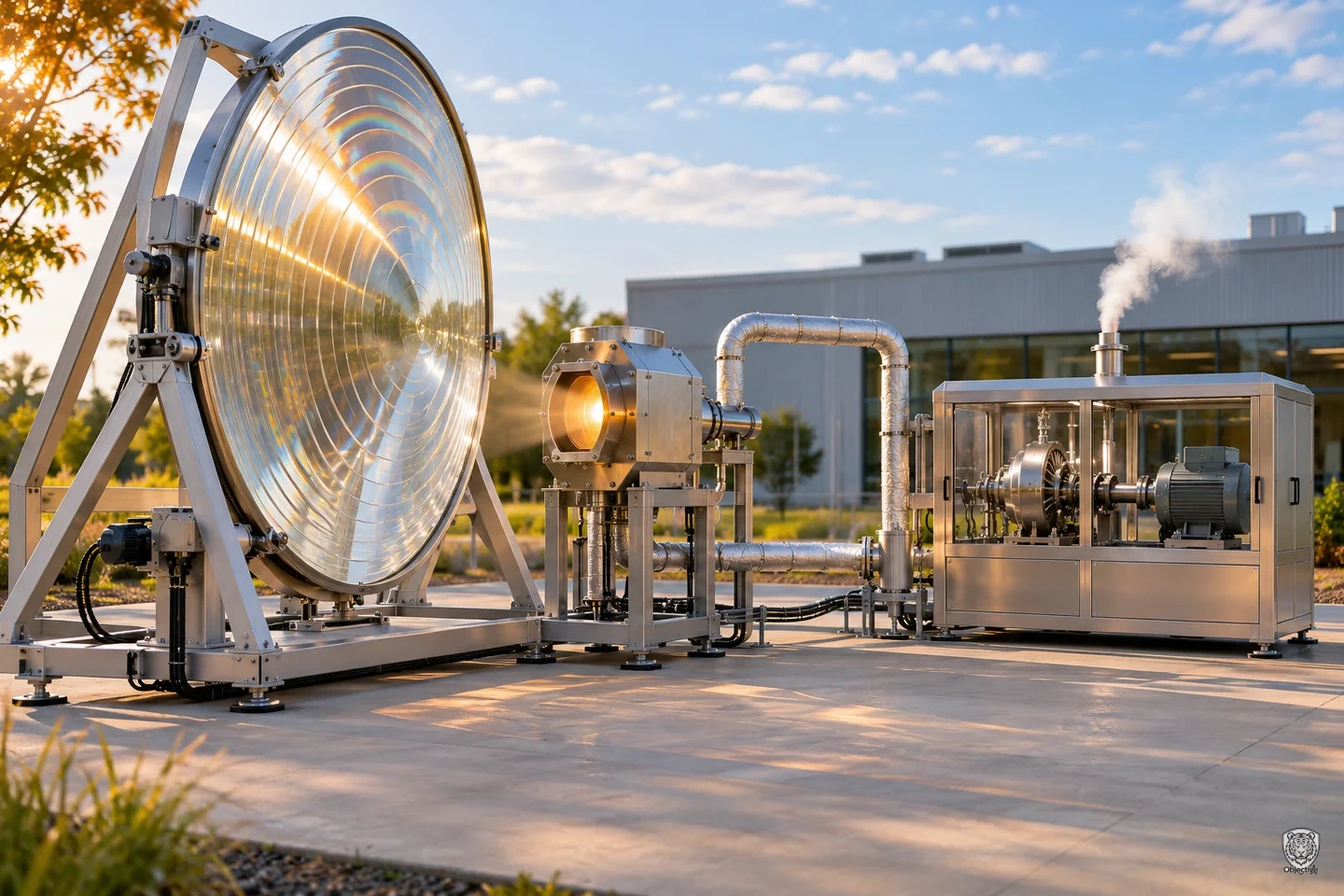
Turning Waves into Power
How wave energy machines capture ocean motion, why storage and storm survival matter, and what careful testing can reveal about their future.
A wave lifting a floating buoy carries energy that could become electricity. Engineers are building machines to capture some of that motion and put it to work. The idea is simple to picture, but the ocean makes it hard to deliver reliable power at a useful price. Understanding both parts helps explain why wave energy attracts interest and still needs careful testing.
Waves are not tides
Most surface waves begin when wind transfers energy to water. As a wave moves, water mainly rises, falls, and travels in loops. The energy moves onward, while the same water does not travel all the way across the ocean with it. Waves can carry energy far from the weather that created them, as NOAA explains.
Tides have a different cause. They are the long, regular changes in sea level driven by the pull of the Moon and Sun. NOAA's guide to tides explains this daily cycle. Tidal energy devices often use currents produced as that water flows. Wave energy machines instead capture the motion of passing waves. Both belong to marine energy, but their designs and operating patterns differ, as the Government Accountability Office explains.
Machines that move with the sea
There is no single design for a wave energy converter. Some float offshore; others sit near the coast. Each needs a way to turn water movement into useful mechanical motion, then electricity.
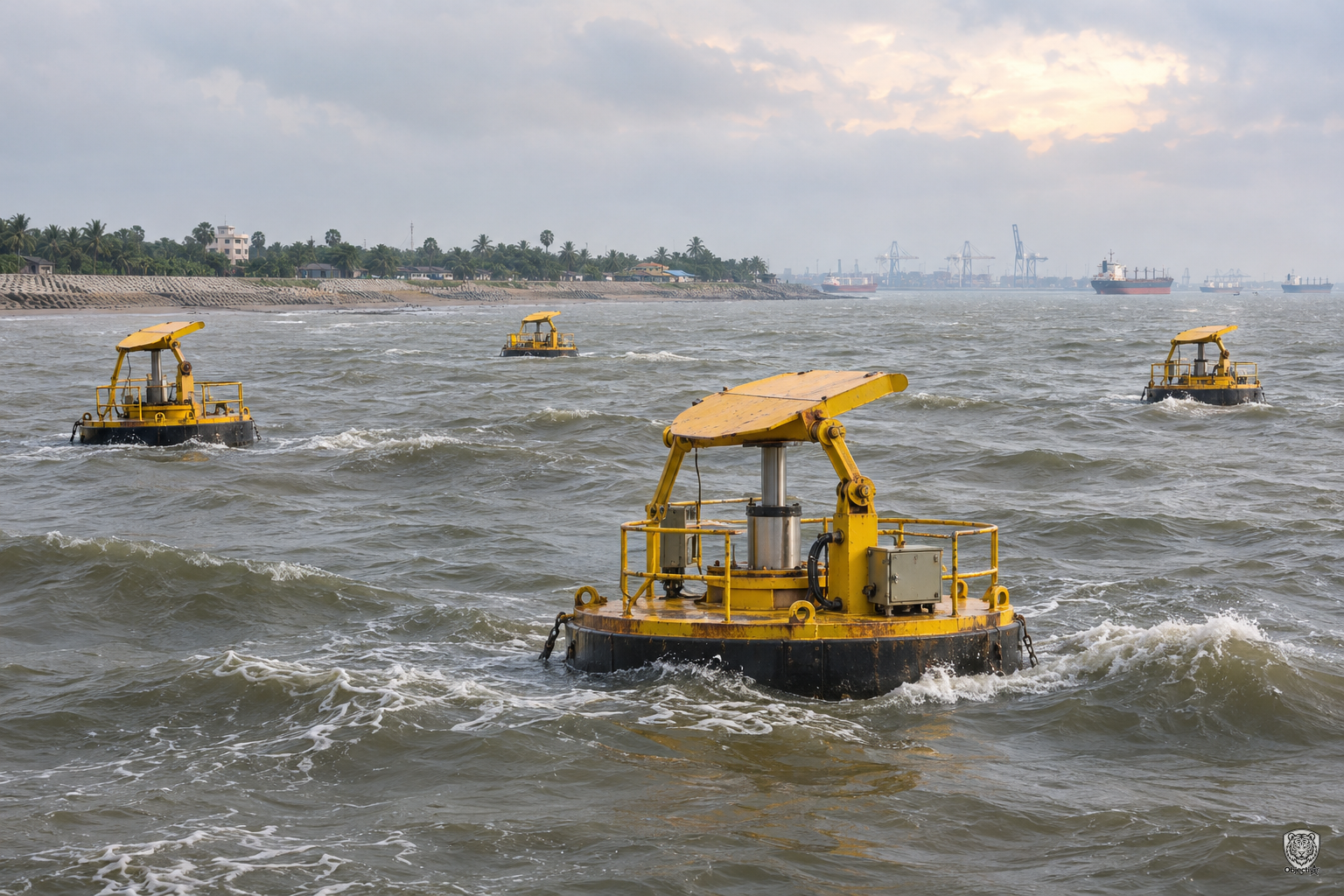
A point absorber can look like a large buoy. Its floating top moves relative to a base or another part of the machine. Its power system captures that difference in motion. An attenuator uses connected floating sections that bend as waves pass along them. Their joints provide the movement needed to extract energy. These are two designs described by the European Marine Energy Centre.
An oscillating water column takes another route. Waves raise and lower water inside a partly submerged chamber. That movement pushes and pulls air through a turbine, which drives a generator. The Department of Energy's glossary also describes overtopping devices: waves fill a raised reservoir, and the collected water flows back to sea through a turbine. Different machines therefore capture different kinds of movement, even though they use the same resource.
Turning bursts into useful power
Waves arrive in uneven groups. Their height and timing change, and conditions shift with weather and seasons. A converter's output can rise and fall within seconds. Sending that changing output to an electric grid requires controls and careful design.
Batteries can absorb extra electricity during stronger bursts and release it between them. A national laboratory study of wave energy storage examined this approach using computer models. It found that storage could smooth power, while the size of power peaks affected equipment costs. That does not mean a battery makes every wave project economical.
Think of a battery as a tank with a limited size. It can hold a short burst for later use, but it cannot keep supplying power once it is empty. That simple limit helps explain why the amount of storage must match the job it is meant to do.
Storage also has limits: it can only return energy that was stored earlier. Covering a long calm period is a different task from smoothing a few seconds. Wave power would therefore need to fit into a wider supply plan. The Department of Energy identifies a possible role alongside other energy sources, including in island and remote community grids.
Built for a rough ocean
The strongest waves can threaten the same equipment they could power. A machine must withstand extreme forces as well as years of repeated pushing and bending. That repeated stress can cause fatigue, gradually weakening parts.
Some designs stop generating and enter a survival mode during severe conditions. Researchers are also testing machines that change shape to let destructive waves pass more easily. National laboratory research on these designs shows the tradeoff: capturing more energy matters, but so do strength, weight, and cost.
Saltwater corrosion and growth on wet surfaces add further problems. This unwanted buildup of organisms is called biofouling. It can affect marine equipment, so researchers at Pacific Northwest National Laboratory test protective materials, coatings, and cleaning methods. A design that works well in a tank still has to prove that its parts can last in the sea.
This changes how success should be judged. A brief burst of high power is useful to measure. So is a long record of steady service. If a machine spends too much time being repaired, its best test results may say little about what users can expect.
Protecting life at sea
Renewable power still needs an environmental review. A wave device and its cables may change habitat or affect how animals use an area. Construction and operation can create underwater sound. Power cables also create electromagnetic fields, raising questions about effects on nearby marine life.
These are potential effects to investigate, not proof that every project causes harm. The risks depend on the equipment and the place. PNNL's Triton research develops tools to study concerns such as noise, animal interactions, and habitat change. Measuring what happens around real devices gives developers and regulators better evidence than assumptions alone.
People who use the ocean matter, too. Fishing grounds and local knowledge should inform where testing happens. At Oregon's PacWave South test site, the location was chosen through public outreach that included the commercial fishing community.
A realistic path forward
PacWave South offers developers offshore test areas connected to shore by power and data cables. Its purpose is to help evaluate machines in real ocean conditions, with environmental monitoring. A working test facility creates a place to gather evidence; it does not establish that every device tested there will succeed.
Large power plants are not the only possible goal.
The U.S. Government Accountability Office identifies ocean sensors, offshore activities, and coastal communities as possible users of marine energy. Smaller applications may offer useful steps toward better designs. The next questions are practical: how much electricity reaches the user, how often repairs are needed, and what the full system costs. Wave energy's progress depends on answering those questions through sustained testing. The ocean supplies motion; engineers still have to make that motion useful, affordable, and responsible to harvest.